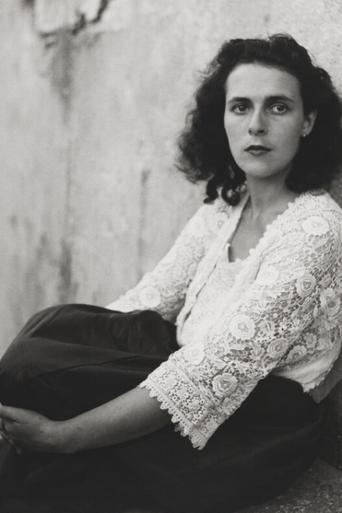
Unpopular opinion: I think the VHS look is the best thing about the film. Otherwise, it seemed like the film was made by this dude: www.youtube.com/watch?v=Qssvnjj5MooAlso, I have to say that Leonora Carrington's Self-portrait (Inn of the dawn horse) from 1937-1938 is the most badass self-portrait I've ever seen. She is seated on the throne, hair is flowing, there's that hyeena-horse hybrid and horses are flying everywhere.
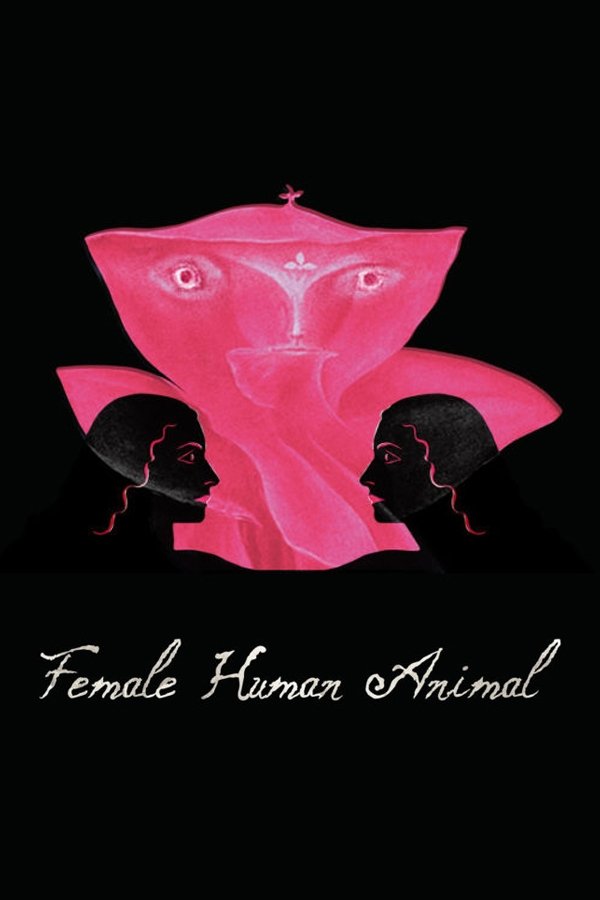
Early on in Josh Appignanesi's fourth feature, Chloe Aridjis declares that she doesn't like the times she lives in, and would prefer to be in some other era. She's playing a character with her own name who is currently putting on an exhibition of the paintings of Leonora Carrington, as Aridjis herself did in 2015. Despite this, there is little chance of confusing Female Human Animal with a documentary. Aridjis is haunted by the strange, eerie compositions and unclassifiable animals in Carrington's paintings, as well as a mysterious stalker, a predatory boss (Angus Wright) and her own father, whose baleful, sagging jaw recalls the Pale Man from Pan's Labyrinth.If there was ever a film that tried to put Carrington's world on screen, in the manner of Lech Majewski's films on Bruegel and Bosch, Guillermo del Toro would be the only viable director. What Appignanesi and Aridjis are doing here is different, not least because they lack the budget to film that Surrealist-Edwardian bestiary. Female Human Animal gets a lot of suspense out of minimal means, filming its defining scene of violence simply by panning across some wild grass. The link between the pastoral and the horrific, not to mention the magnificent sick joke in the scene that follows, could have come straight from one of Carrington's elegantly nasty short stories.The only previous film of Appignanesi's that I've seen was The Infidel, a rather clunky, preachy comedy about British Jews and Muslims. Female Human Animal is a major leap forward. It never uses its dream-like narrative as an excuse for self-indulgence, remaining taut and purposeful across its brisk 74 minutes. Aptly for a film about the legacy of a visual artist, it has a keen sense of visual storytelling. I particularly liked how Wright is seen through a distancing pane of glass until he makes a move on Aridjis, allowing the viewer to feel her sudden, unpleasant sense of clarity. The film's major visual eccentricity - its retro VHS look - suddenly makes sense halfway through, when Appignanesi cuts to a TV clip of the late Carrington, and the match of formats makes it look as if she's in the room with Aridjis.As for the narrative eccentricities, there are plenty, and I'm sure a lot of people will find it pretentious. (Aridjis opened her recent Sight & Sound piece about the film's inspiration by saying "In these highly polarised times, we could ask, how do we create a space for our own indeterminacy?" - I know I've been thinking of little else recently) But is it so difficult? The film's link between high culture and psychological suspense is one that has plenty of precedent; think Hitchcock collaborating with Dali on Spellbound, or Denis Dercourt's The Page Turner. There have been horror movies and thrillers based on the work of Godfried Schalcken (Schalcken the Painter) and Lynn Hershman Leeson (Lady Beware). Up the sex and violence considerably, and the central plot conceit of Female Human Animal could fit nicely in Dario Argento or Jean Rollin's back catalogue.And yet all of these films were rather more mainstream than Appignanesi's. I don't think that's a sign of his failure, rather it's a sign of the mainstream retreating from anything that could be considered abstruse or 'arty'. Maybe Aridjis is right to wish she lived in a different time.
A movie that is SOV in 2018 (and TRUE SOV, not digital crap) is always gonna ingratiate itself with me (aside from one scene that looked like it was HD for some reason). my only criticism is that a tripod could have been used since the handheld shots play TOO much into a home movie/underground amateur look. aside from that small criticism, the cinematography is beautiful with appignanesi taking full advantage of the dreamy medium.anyways, this is a sort of hybrid docu-thriller, contextualizing itself in the work of surrealist artist leonora carrington and starring novelist chloe aridjis as an anxious, restless museum curator feeling suffocated by patriarchy and the art world. there are some genuinely tense moments in here, a testament to the acting of aridjis and eye of appignanesi. the recurrent motif of plastics as suffocating, at times liminal spaces, speaks to chloe's (and leanora's) feelings toward 'modernity' (not capital m Modernity though). the script is a bit messy at times, but i think the metaphorical breakthroughs work in the end and fall in line with carrington's work.catch it on mubi before it's gone after tomorrow!