
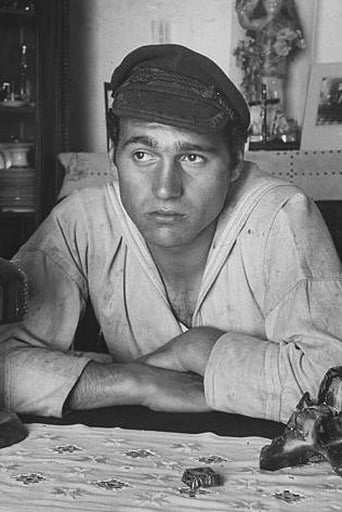
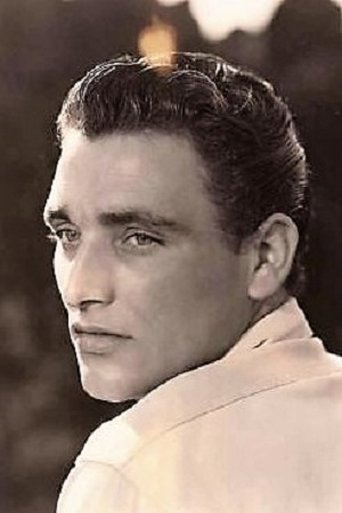

Brody's observation is interesting, that the film is as much a documentary about Bergman in a neo-realist film as it is a narrative. But the film is called Stromboli, not Bergman, and this is really a means to an end. Performativity is certainly an aspect here but only in its relation to the land, and how our relation to nature necessitates a gradual rejection/stripping away of the 'civilized' constructs we create. But what is civilized only exists in our minds, and what we determine as society changes as our environment demands. Bergman/Karin complains that she is "too civilized" for such a place, initially regarding the islands people as primitive brutes, but even Stromboli has its own societal constructs. Karin's outcry at her husband's 'playful' releasing of a ferret so it can kill a baby rabbit is the first sympathetic reaction her character produces, but there's a greater implication which is extended at the films end - that nature is a law unto itself, but that there is also a greater, universal humanity possible if we can learn how to respond to cruelty.Two scenes, both the peaks of reality as mis-en-scene: the tuna sequence (has any representation of existential quandary come as close as this does to convincing the viewer that they must go vegan?) where Karin's reactions to the capturing of fish continues this line of responding to the grander implications of cruelty. Yet for these villagers, this is a way of life. But these responses are key for Karin, who spends much of the film a considerably vain and unlikeable figure - the more she responds to the environment, the more she becomes one with the land, realizes that she isn't above nature but a part of it - she discovers humility. But good lord, the volcano scene - if we can get over the initial shock of a major Hollywood actress scaling a live volcano, this line reaches it's conclusion - Rossellini claimed his only influences were Vidor, Murnau & Chaplin, and here he demonstrates the skill of the greatest silent filmmakers. But that's beyond the point. Karin reaches the summit, sees the sun above the clouds, and finally admits "I'm afraid."And what is it we see when Karin cries out "Merciful God!" but a flock of birds? Rossellini, an atheist, determines that God is not one thing, but all things. Germany Year Zero, Italy Ground Zero. Or to borrow from Fred Camper, a 'personal' year zero. Like Truffaut said, "Rossellini used to film bombed out cities, now he films bombed out souls."