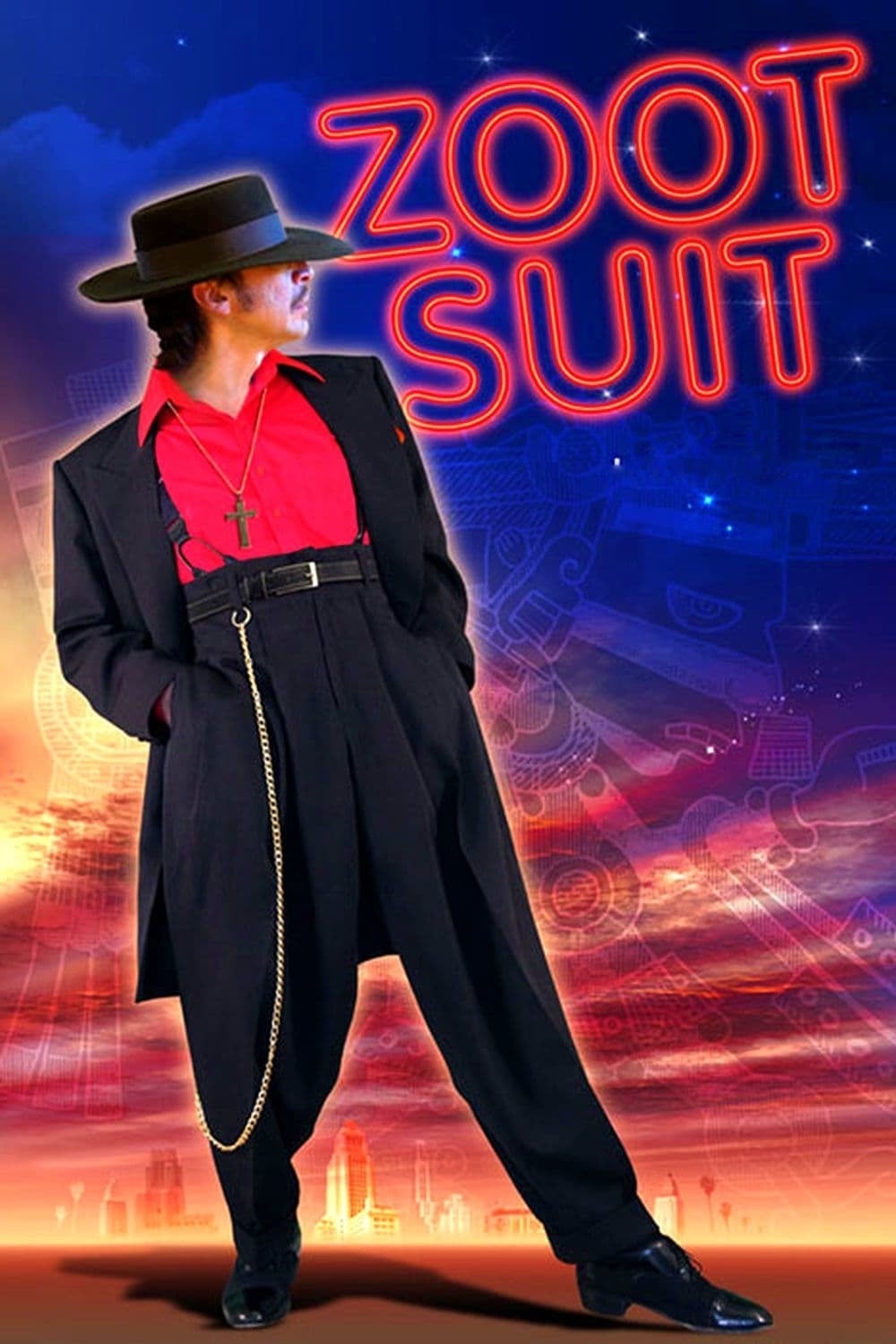
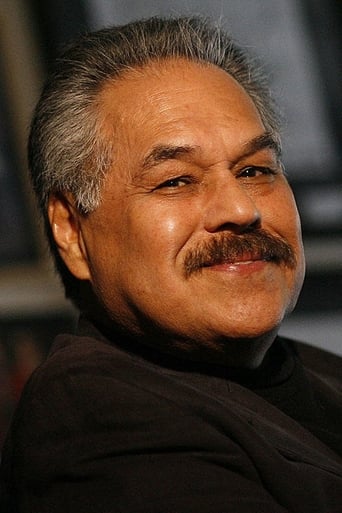
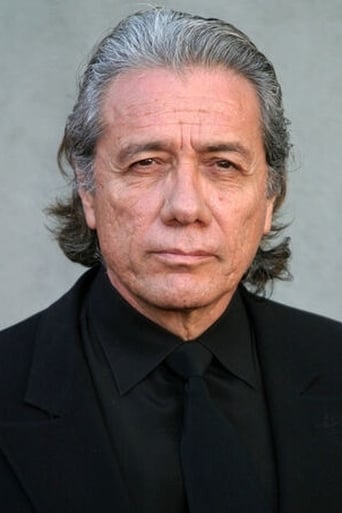
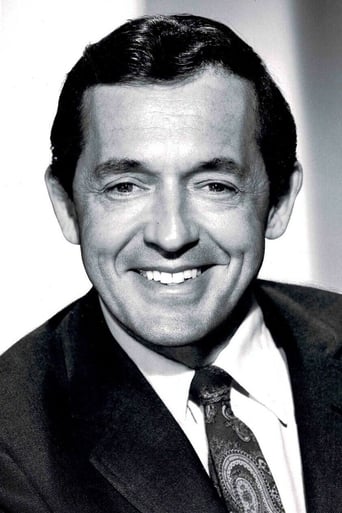
Part fact and part fiction, Zoot Suit is the film version of Luis Valdez's critically acclaimed play, based on the actual Sleepy Lagoon murder case and the zoot suit riots of 1940s Los Angeles. Henry Reyna is the leader of a group of Mexican-Americans being sent to San Quentin without substantial evidence for the death of a man at Sleepy Lagoon. As part of the defense committee, Alice Bloomfield and George Shearer fight the blatant miscarriage of justice for the freedom of Henry and his friends.
"Zoot Suit" is a 1981 biographical and historical musical directed by Luis Valdez. Its historical embodiment tells a recreated story of the inception point for the Zoot Suit Riots, more specifically an event intitled the Sleepy Lagoon Murder that saw a grouping of young Mexican-American's incarcerated for the crime in rushed due process and without any clear evidence that they committed the crime in the first place. Much of this was due to racial injustices at the time and a mentality against "Zoot Suiters". On August 2nd, 1942, one José Gallardo Díaz was found in a lagoon like area in the city of Commerce, California, unconscious and subject to absorbent amount of injuries. As he later succumbed to these injuries in the hospital, the LAPD rounded up a grouping of young local men who fit the Chicano and Zoot Suiter description, notably named the "38th Street Gang" by national spreading of the news story. This event ultimately became the catalyst for riots in 1943 that spread nationwide that were already brewing to a boil due to racial inequality-based mindsets as well as an act by the military to take actual Zoot Suits from their owners due to war rations and the clothing's abundant inclusion of fabric that could be repurposed.The film most directly tells the story of the group incarcerated, the unfair process of the trial, time within barred walls, and a reversal of the court decision that led ultimately to the prisoners' freedoms. Though this was achieved, time spent on the inside affected all those involved, as the story progressively tells in musical fashion. As "Zoot Suit" was in all actuality a 1979 Broadway performance beforehand, Luis Valdez took the same approach to film as the film blurs the lines of stage and film. In that, I have to applaud the efforts of the stage production and blocking, as the film is pretty enthralling throughout is larger performance portions of the film. The scenes featured of standard acting is fine, but during most of this I found myself really just wanting another large song and dance to appear on the screen. Edward James Olmos steals this film outright as the most polarizing figure, as he is simply "El Pachuco", a figurative character that serves as the narrator of the story and the whispering entity that only speaks directly Henry Reyna (our lead character) in conscious form. Pachuco serves as an enthralling angel/devil persona that simply gives burden of proof to the scenario around. Ultimately, the film is worth seeking out as it has a surrealism element similar to something that you would see in "All That Jazz" (1979). Similar tonal build about the marvels and demons of life, all in a blurring extraction of stage and film. "Zoot Suit" should absolutely be a film due for a resurgence of viewing as it is impressive on multiple fronts. It's a visual punch that holds metaphoric and historical value all in one containment, easily a tandem build of enjoyability and importance.
Jonathan 🐼3.5
I think about the Marihuana Boogie everyday
Quiller3.0
Luis Valdez’s play Zoot Suit has always been successful when produced in Los Angeles, but it doesn’t always travel well. Its Broadway run lasted just over a month — 41 performances — though Edward James Olmos got a Tony nomination for his supporting turn. Even critics who liked it in L.A. found it less appealing the second time. This film adaptation, written and directed by Valdez, suffers from the same problems. Just as Zoot Suit probably works best for audiences from Southern California (where it’s set), it also probably works better on stage than on film. Valdez emphasizes his story’s theatricality, to the detriment of its cinematic appeal. The only times it feels like a film is when he and editor Jacqueline Cambas use jump cuts. But Valdez keeps reverting back to staginess.Of course, overt theatricality was in vogue in movie musicals during the 1980s (e.g., Pennies From Heaven, Absolute Beginners, etc.). Personally, for all Valdez’s importance to Chicano/a theater and film — he was a pioneer and a politically committed artist — I just don’t think Zoot Suit is a very good play. It offers a fictionalized account of the “Sleepy Lagoon” case, wherein several young Chicanos were railroaded for murder on flimsy evidence thanks to an openly biased judge. Their convictions were eventually overturned, but the racist rhetoric surrounding the case likely contributed to the Zoot Suit Riots of 1943. Valdez’s brother Daniel (who originated the part on stage) plays the protagonist. He’s one of the wrongly convicted men. Will he let himself be beaten down by the system? Or will he defy the injustice he’s a victim of and become a model for other young Chicanos to look up to?I don’t disagree with the play’s message or the stylized approach Valdez takes. On film, however, the stylization feels even more exaggerated — to the point that the actors sometimes slip into self-parody. I don’t think it’s intentional, but Olmos (recreating his Broadway performance) almost seems like a racist’s caricature of Mexican-American men. The vagueness about his character doesn’t help. For most of the film, only Daniel can see or interact with him. Is he the devil on Daniel’s shoulder? Is he Daniel’s id? Paradoxically, the implication is that Olmos antisocial characteristics are innate in Chicano men. At times, however, other characters can see Olmos. Is he their racist projection? Is he the image of dangerous Chicanos that white society has discursively created? I’m not sure that Valdez has thought his ideas through fully.Despite my qualms, I can’t deny Zoot Suit’s significance. As far as we know, it was the first Broadway production directed by a Chicano. I also think that some of its parts are fun. For instance, several songs were co-written by the influential Latino musician Lalo Guerrero, who certainly brings a lot of style to them. Once again, however, I don’t think the songs are integrated into the play itself very carefully. They merely punctuate or illustrate the story; they don’t push it forward meaningfully or comment on it in interesting ways. I’m probably criticizing Valdez unfairly for not being either Oscar Hammerstein II or Bertolt Brecht, but how else can I explain why I’ll never rewatch this movie?
More like this
Common questions
What is Zoot Suit about?+
It follows the true story of the 1940s Sleepy Lagoon murder case, where a group of Mexican-American youths are wrongly accused of murder and face systemic racism in Los Angeles.
Who directed Zoot Suit?+
It was directed by playwright Luis Valdez in 1981, who was already well-known for his work in Chicano theater and with the United Farm Workers.
Is this film based on a play?+
Yes, the film is a direct adaptation of Luis Valdez's critically acclaimed stage production of the same name, intentionally retaining many theatrical elements.