



why’d he throw his trash on the ground.. i hate men
We use cookies to personalize your experience and analyze traffic. You can opt out at any time.

Directed by Éric Rohmer
La Boulangère de Monceau
An acclaimed, grounded romance.
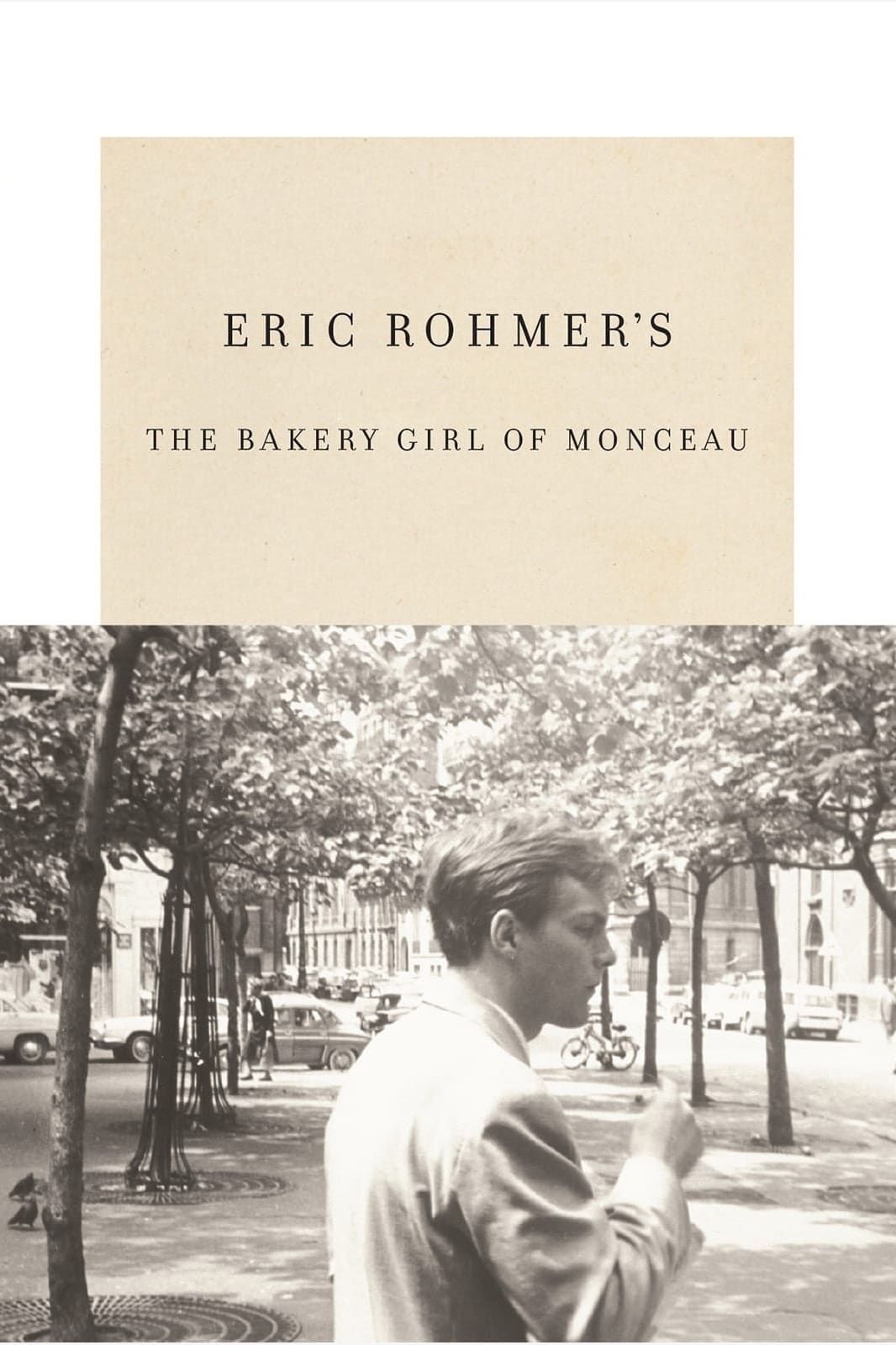
Early new wave effort from Rohmer, which was the first of his six moral tales. It concerns a young man who approaches a girl in the street, but after several days without seeing her again, he becomes involved with the girl in the local bakery. Eventually, he has to choose between them when he arranges dates with them on the same day.
The Bakery Girl of Monceau isn't screening in cinemas right now.
Follow the film in the app to get notified when showtimes are added.
The Bakery Girl of Monceau showtimes, refreshed every morning
Pick your cinema, get a nudge before it leaves screens.


why’d he throw his trash on the ground.. i hate men

If he drops the biscuit paper on the floor ONE more time...

Eric Rohmer's 1st Moral Tale-->Possible moral topic(s) treated: Romantic manipulation.Halfway through, I began to think of the idea that as long as I keep progressing throughout Rohmer's moral tales, I'll get nostalgic whenever I think back of this one.A delightful introduction to Rohmer's New Wave perspective, this short effort gives us a glance at the fact that the moral topics to be found in each tale are based on the characters perception of the term "moral", which must be subjected to debate. The protagonist here creates his own definition of moral, which consists in dating the girl he had originally fallen in love with instead of dating "the mistake". The girl in the local bakery becomes his instrument of imagined revenge against Sylvie, and thus is objectified. As horrible as it sounds, it is the most common thing in the world, because truth to be told, men are kind of assholes in relationships, beginning with infidelity.Haha, what a promising start!85/100
The film follows a Parisian law student who finds himself torn between two women—one he spots on the street and another he meets in a local bakery—after scheduling dates with both for the same day.
The film was directed by French New Wave pioneer Éric Rohmer in 1963 and serves as the inaugural entry in his series known as the Six Moral Tales.