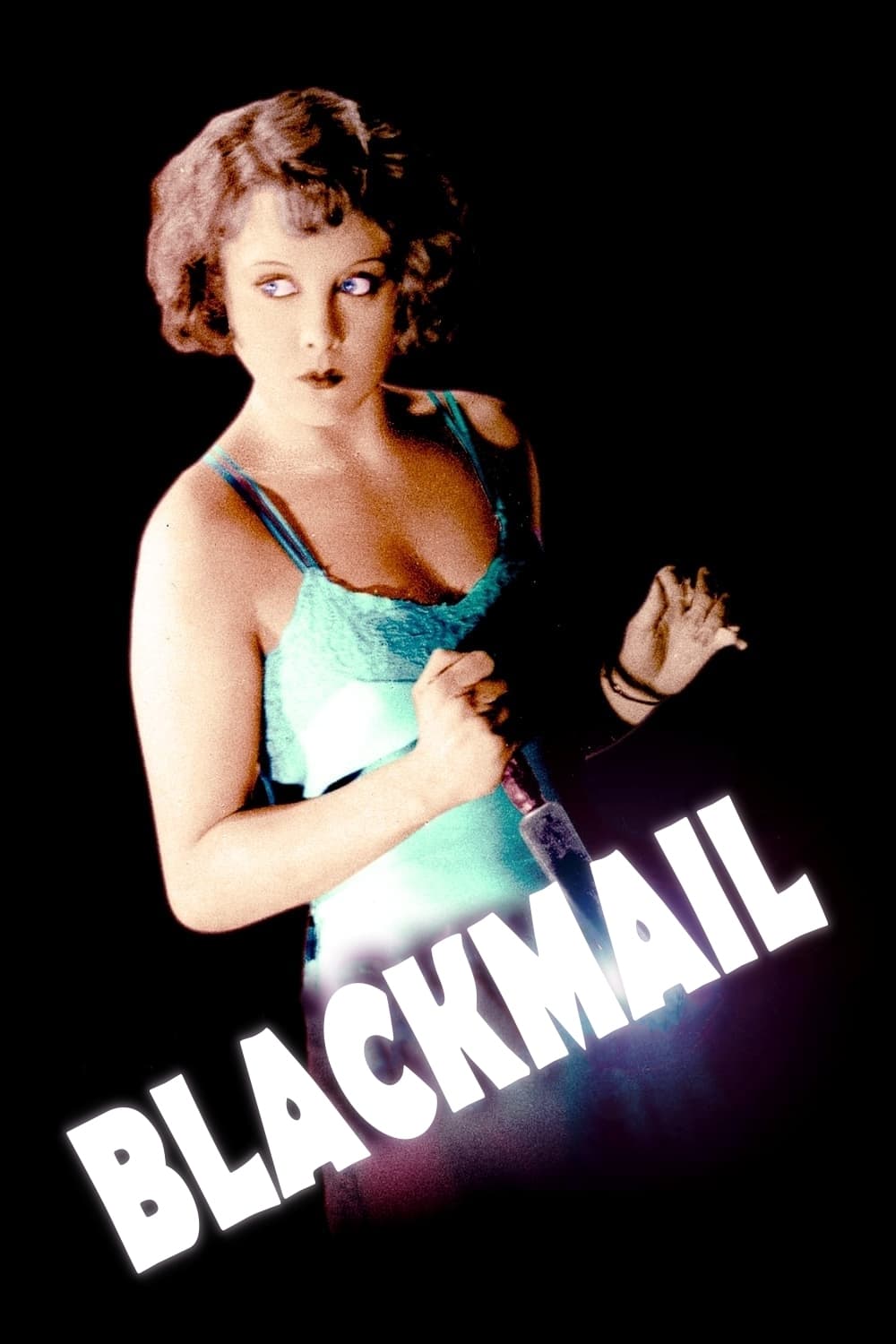




Hitchcock finds himself caught in his own handcuffs with “Blackmail.”He’s saved in an astonishing magic act by a single word, perhaps the most important one ever uttered in British cinema: “Knife. Knife. Knife. Knife. KNIFE!” The single syllable, repeated again and again in the background babble of a scene of “Blackmail,” terrorizes a woman who has just committed murder. And, Hitchcock’s employment of that sound defined how sound itself could be used in all cinema to come. Much of the rest of “Blackmail,” however, is drowned in the din of the birth of the talking picture. Arrested by studio expectation to create one of Britain’s first sound features, the director cedes style to formality in “Blackmail.” The work has moments and ideas that could be claimed only by its director, though the work as a whole feels staid and muted, as Hitchcock’s voyeur of a camera now needs a sound booth as an escort. Beyond repetition of previous structures and themes, most notably the explosion of “The Lodger,” there is little that distinguishes “Blackmail” as extraordinary, beyond its extra historical significance as Hitchcock’s first sound feature. His camera seems more planted to take photographs than it does to capture film. The director’s yearning for motion is almost palpable. In a very Hitchcockian development to the story of “Blackmail’s” production, its most notable moment of stylistic freedom was done in darkness. “Blackmail’s” distinctive chase scene through the British Museum (one that very much portends Hitchcock’s most famous chase decades later in “North by Northwest”), used the Schüfftan process; a technique kept totally secret from the producers of picture. Most famously utilized by Fritz Lang in “Metropolis,” the trick of mirror and prolonged lens exposures not only allowed the director to film in a location of low light, but also are the most evident remnants of Hitchcock’s German Expressionist roots. Through the darkness, though, while the camera could not yet entirely follow, there is one word that still echoes. Knife. Knife. Knife.