

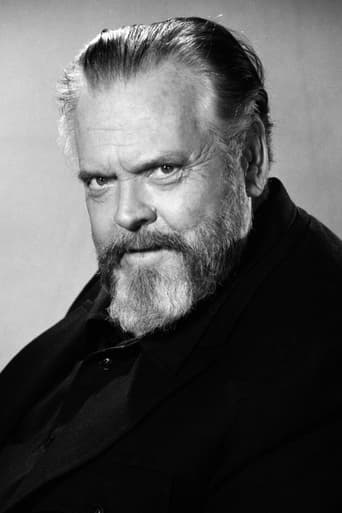
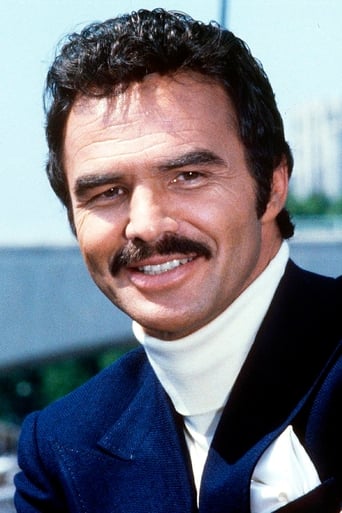

It amazes me how much it seems people didn't enjoy the fact that Orson Welles, this insane intellect and preposterous otherworldly egotist, was on their televisions on a REGULAR basis in the 1970s. He would introduce movies, tell funny stories on Carson, he would laugh and smoke and make fun of his weight. He was truly a man of a different era, the kind that Hemingway would have loved to hate or hated to love. And here he was in the same time as Sonny & Cher and MASH. I guess it wasn't a surprise to me that Orson would try to make something in the medium himself and a talk show makes sense, who doesn't love to hear that man talk. But the format is pure Orson, pretentious and bold, innovative while also being horribly misjudged, and of course way ahead of its time while being deeply noncommercial. The part feels the most fresh is the first 40 minutes where Orson interviews Burt Reynolds via a very strange choice. The interview itself is extremely ahead of it's time. It's the kind of inventive and personal longform conversational interviews that Marc Maron and Conan O'Brien are now praised for on their podcasts. Yet it's coming when even Dick Cavett could not force an interview to go on that long. But here again it is innovative met with strange choices. Instead of Orson asking the questions instead it is framed as a Q&A, but in classic F for Fake fashion it is all an illusion. He never says so but the audiences are plants fed lines by Orson to give the illusion of spontaneity where there is none. I honestly wouldn't even mind if this was made perfectly clear at the end but it is not. The show is constantly battling with the very idea of why we want to consume mindless late night talk shows anyways. Much like always Orson was far more done with them than we were and the idea he could sell such a strange show that felt so bitter to the format is remarkable. His treatment of the Muppets for instance is both completely reverent but he does use them like the are to be used, instead editing Muppets like Other Side of the Wind, a surreal experience indeed. Then there is the magic half hour, which sadly works the least. Orson has already done magic chopped and screwed with fast cuts and editing but it was in a film entirely about forgery. Here he is making supposedly a show to bring authenticity to the television medium but exploring surreal and crazy editing that ruins a trick. Fred Astaire famously hated any cuts for his dance routines because to him a misstep was too easy fixed in post. Magic is the exact same way.And this is where I do find some frustration in that I wish Welles had frankly gone further. Come on, give us the pure F for Fake hour. Be experimental and strange. But this is late Orson, broke and still thinking he would direct again (he sadly never would finish another directorial effort). His own fear I think is keeping this from being something special. But it is unique and lovely. I admit, I stan for Orson. I am a member of Orson Alliance and proud of it. I admit I see a lot of my own pomposity and ego in the man. But I admire his ability to say whatever he wants, to embrace that level of ego and chatterboxing and to embrace fully himself. Orson was a strange fellow and one I admire everytime I see something new from here.What a wonderful and beautifully special creature Orson Welles was. We didn't truly appreciate him when we had him.