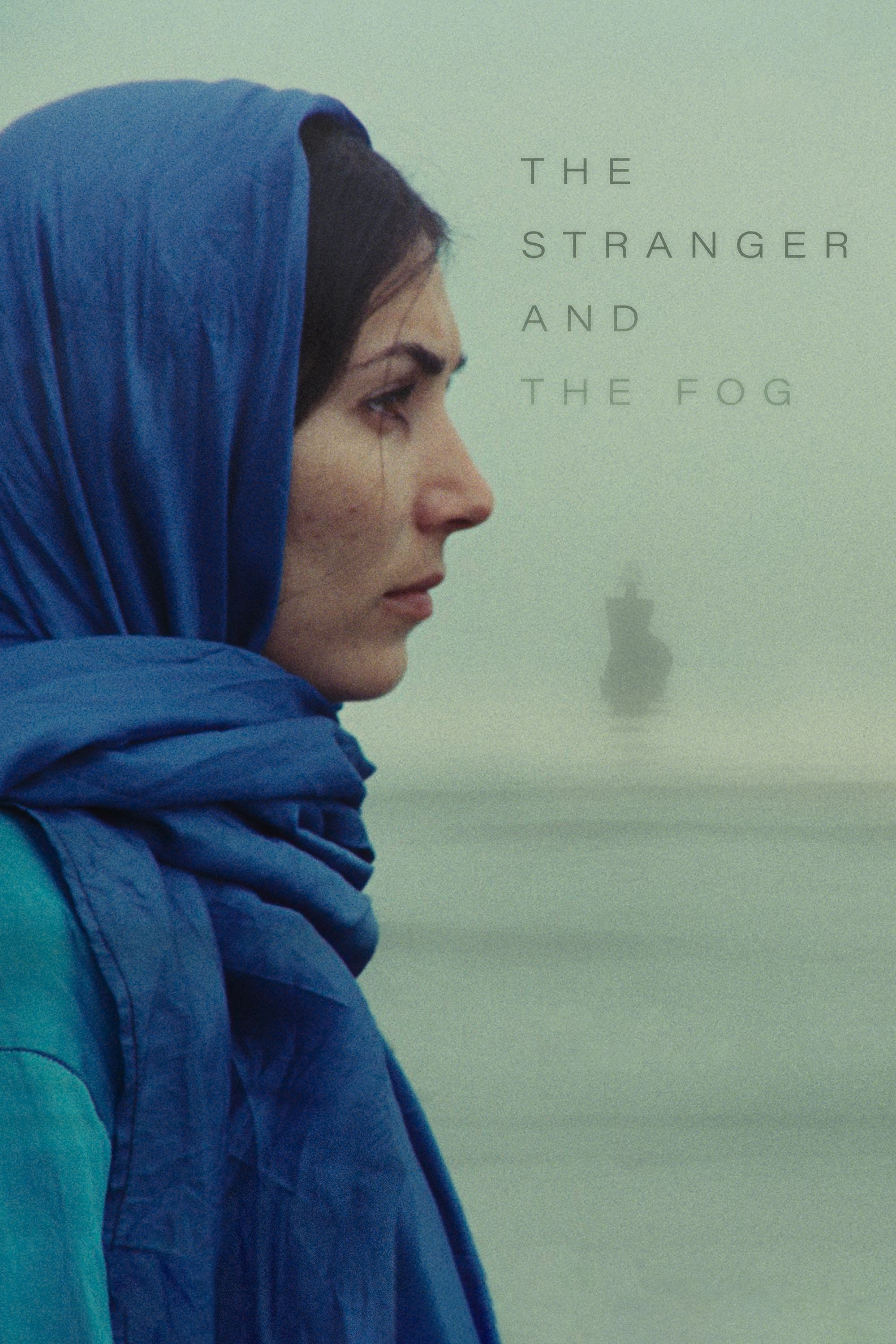
the stranger and the fog — a mythic allegory of repression and lost memorybahram beyzai’s the stranger and the fog marks a significant shift from urban realism to a deeply symbolic, mythic, and highly formalist cinema. a spiritual and thematic departure from ragbar, the film reflects beyzai’s evolving concern with identity, alterity, collective amnesia, and the oppressive structures of traditional society.set in a timeless and placeless coastal village shrouded in mist, the story revolves around a mysterious stranger, ayat, whose presence disrupts the closed order of the community. the fog becomes a metaphor for both historical forgetfulness and moral obscurity, a society where truth is buried, and the “other” must be purged to preserve a decaying order.the narrative unfolds in a highly stylized, episodic form, echoing beyzai’s theatrical background. dialogue is lyrical and symbolic, while the mise-en-scène often resembles ritual theatre and persian passion plays (ta’zieh). beyzai dismantles linear storytelling to explore archetypes and collective neuroses, revealing the tragic patterns of iranian history and culture.a central axis of the film is the role of the woman, played with extraordinary stillness and intensity by parvaneh massoumi. she is more than a character, she is a cultural symbol: mother, lover, guardian of truth, and bearer of suppressed memory. in opposition to passive, fearful, and judgmental men, she stands as the active moral force in the film. her silence is not surrender, but a deeper form of resistance, an embodied memory that challenges the village’s masculine violence and fear of the unknown.the village itself becomes a metaphor for traditional, patriarchal iranian society, one that resists change, fears outsiders, and persecutes difference. the people are not evil, but trapped in rituals, superstitions, and inherited structures that prevent them from seeing clearly. ayat, as a figure of the intellectual or outsider, is ultimately consumed by the very system he disturbs. and the woman, bound by gender and rumor, is left to guard the ashes of a truth no one dared to confront.the stranger and the fog is not merely a tale of a lost man, it is a meditation on memory, history, and the impossibility of transformation in a society unwilling to look beyond the fog of its own fears. in beyzai’s cinema, the tragic loss is not just the individual, but the very capacity to dream of another future.
I won't keep silent. Isn't it enough that you wasted my life? I grew old. Your "honor" made my hair white. I withered. Look at me! This is easily one of the strangest and unique films that I've seen. Like it's not an easy film to pin down. It glides somewhere between allegory, mythology, and social parable, cloaked in an ever-looming fog that seems to obscure time, place, and motive. Yet, in its opaqueness lies its allure. A visually arresting and thematically dense masterpiece that blends myth, folklore, and socio-political critique into a dreamlike narrative. This is the kind of film that drifts you into it, like a dream, or a memory you never knew you had. From the very first shot, I knew I wasn’t watching a film in the usual sense. I was entering a fable, a forgotten parable suspended in mist, myth, and melancholy. Also, It reminded me, unmistakably, of Bahram Beyzai’s own Death of Yazdgerd, especially in its formal structure and theatrical abstraction. Both films unfold like moral allegories filtered through dream logic. There’s an overwhelming sense that what we’re watching isn’t just narrative, but performance, ritualized, heightened, and steeped in a tradition far older than cinema itself.The story begins with a man (the “Stranger”) washed ashore, unconscious, in a remote and insular fishing village. He is nursed back to health by the villagers but cannot remember who he is, how he got there, or what past he carries. The villagers, skeptical at first, eventually accept him into their lives , albeit with unease. But soon, figures emerge from the sea, cloaked men who seem to pursue him, and a fog rolls in, thick and oppressive, like an omen. The stranger’s past is literally catching up with him. The narrative premise may sound like a thriller, but Beyzai’s treatment turns it into something closer to philosophical poetry. This is not a film about memory as a puzzle to be solved, but memory as a force that defines and dooms us. The fog is more than weather, it is history, guilt, the past that never fully dissipates. Like the sea in Tarkovsky’s The Sacrifice or the Zone in Stalker, the fog here becomes a metaphysical presence. It’s Beyzai’s way of reminding us that forgetting, like remembering, has consequences.Don't listen to them! Do whatever you like! No one knows your needs except you. No one knows what it means to raise a child alone. Stylistically, the film is hauntingly beautiful. What made it one of the best visual experiences for me was how Beyzaie turns the ordinary into the mythical. The village, with its weathered wooden boats and huddled figures, feels like a place stuck in time, yet every shot is infused with this surreal, almost otherworldly energy. The climactic battle, with its Kurosawa-inspired chaos, was another visual knockout. Beyzai’s approach to framing is painterly. He often holds his shots long enough to let us absorb every detail, the way villagers move in clusters, their presence choreographed like figures in a ritual; the way the camera glides slowly across spaces, never rushing, always observing, as if we are witnessing a living folktale unfold in real time. The camera rarely intrudes, it watches. Patient, reverent, and always curious. If you’ve seen Death of Yazdgerd, you’ll immediately recognize Beyzai’s signature here too: the sense of staged realism, where the space feels lived-in but symbolic; where dialogue is deliberate, and where every visual element , from costume to color to architecture, carries meaning beyond its surface. But where Death of Yazdgerd was intensely theatrical and interior, The Stranger and the Fog expands that language into the open, into landscapes and weather, making nature itself part of the stage. And there is a slow deliberateness to everything, as if time itself has been suspended to allow reflection. This isn't slow cinema for the sake of it, it's meditative cinema, where stillness has density. Also, there's a Kafkaesque quality to the stranger’s presence: a man condemned not for what he has done, but for what he may or may not be. The villagers, at first hospitable, slowly grow suspicious. Their kindness turns to paranoia, and we realize that the stranger’s amnesia may be less terrifying than the certainty of others. The tension lies not in what is happening, but in what might happen, a constant undercurrent of unease, suspicion, and the inevitability of fate.In short, this film is a triumph of mood, myth, and meaning. Bahram Beyzai’s vision is uncompromising, and though it may alienate those seeking conventional narrative satisfaction, it offers something deeper: a cinematic experience rooted in Persian thought, timeless fears, and poetic allegory. There are very few filmmakers who can craft such a hypnotic cinematic rhythm, where even silence feels heavy with meaning, and a simple gaze across the sea feels like a philosophical question. Watching this felt like being inside a parable whose message has been half-forgotten, or deliberately erased. It’s that rare kind of film where you emerge altered, not necessarily with answers, but with a lingering weight you can’t quite name. In many ways, it is a film about exile, not from land, but from truth, from memory, and perhaps even from self. It’s one of those rare cinematic experiences that makes you see the world differently.-What did I do? Think! Think! You should already know. - I don't know anything. Neither do we. We follow orders. Orders are not without reason. There must be a reason. Some mistakes? Never. You are the one that has to find out the reason.